
Restroom Trailer Maintenance Tips Before and After Delivery. Buying a restroom trailer is more than a one-time purchase. It is an investment in a working asset. Whether the trailer will be used for events, job sites, disaster response, parks, campgrounds, construction projects, or a service fleet, regular maintenance helps protect performance, appearance, comfort, and long-term value.
A good restroom trailer should be easy to use, easy to clean, and dependable in the field. But even the best-built trailer needs proper care. Plumbing, pumps, tanks, flooring, doors, HVAC, lighting, steps, handrails, and exterior components all need attention over time.
If you are buying a portable restroom trailer, planning for maintenance before delivery can save you frustration later.
Start With a Pre-Delivery Walkthrough
Before putting any restroom trailer into service, complete a full walkthrough. Check doors, locks, lights, steps, handrails, vents, floors, plumbing fixtures, toilets, sinks, mirrors, dispensers, tank access points, and exterior panels.
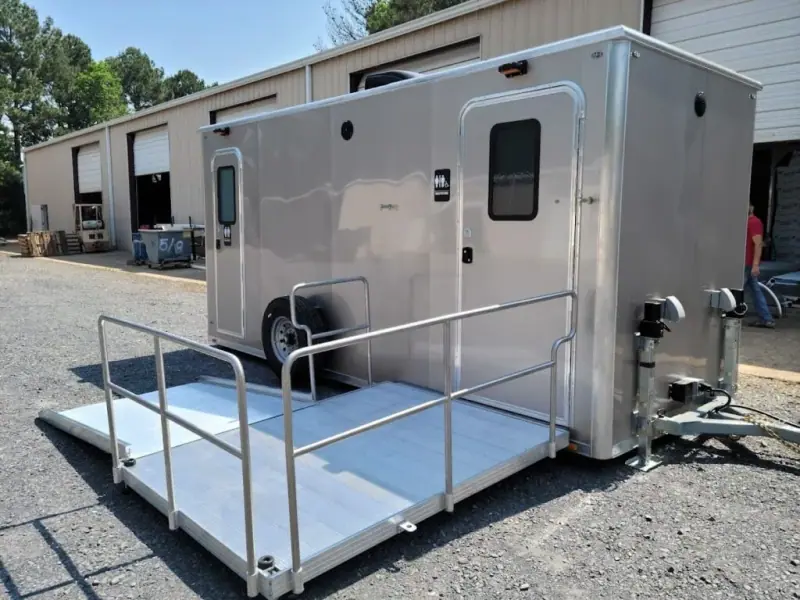
If the trailer includes showers, inspect shower valves, drains, curtains or partitions, ventilation, water heater access, and floor surfaces. For ADA units, confirm ramps, handrails, entry clearances, and accessibility features are in place and functioning as expected.
This first inspection gives you a baseline. It also helps your team understand how the trailer is supposed to look and operate before customers, crews, or guests begin using it.
Learn the Water and Waste System
Every operator should understand how the trailer handles fresh water and wastewater. Some units connect to external water and sewer. Others may include onboard tanks or self-contained options. The setup affects how the trailer is filled, drained, winterized, cleaned, and monitored.
Before use, confirm tank capacities, connection points, valve locations, pump operation, and drainage procedures. Make sure hoses, fittings, and accessories are compatible with the trailer and the site.
A restroom trailer can only perform well if the support setup is correct. Poor water pressure, improper drainage, blocked vents, or overfilled tanks can create avoidable issues.
Keep Cleaning Simple and Consistent
Cleanliness is one of the biggest factors in customer satisfaction. A restroom trailer may have attractive finishes, private stalls, lighting, climate control, and running water, but if it is not cleaned properly, users will notice immediately.
Create a cleaning checklist for each use. Include toilets, sinks, counters, mirrors, floors, drains, walls, dispensers, door handles, trash areas, steps, ramps, and exterior entry points. Restock paper products, soap, sanitizer, and supplies before each deployment.
Use cleaning products that are compatible with the trailer’s surfaces and plumbing system. Harsh chemicals may damage finishes, seals, flooring, or tank components.
Inspect Between Every Job
For fleet operators, inspections between jobs are especially important. Customers may not report small issues, and minor damage can become expensive if it is missed.
After each use, check for leaks, loose fixtures, clogged drains, cracked trim, damaged flooring, broken locks, missing supplies, electrical issues, odor concerns, soft spots, and signs of rough handling. If the trailer was used in muddy, sandy, freezing, or stormy conditions, inspect more carefully.
A quick turnaround should never mean skipping the inspection. Catching issues early helps keep the trailer ready for the next customer.
Protect the Trailer During Transport
Transport is another place where maintenance matters. Before moving a trailer, check tires, lights, brakes, hitch components, safety chains, stabilizers, doors, steps, ramps, compartments, and exterior latches. Make sure loose items are secured inside.
If the trailer has tanks, confirm whether they should be emptied before transport. Traveling with unnecessary water or waste weight can affect handling and add stress to components.
Good transport habits protect the trailer and reduce the chance of damage before it reaches the next site.
Do Seasonal Maintenance
Seasonal maintenance depends on where the trailer is used. In cold climates, winterization may be required to protect plumbing lines, tanks, pumps, valves, and fixtures from freezing. In hot or humid climates, ventilation, AC performance, odor control, and moisture management may need more attention.
If a trailer sits unused for a period of time, do not assume it is ready to go. Test systems before deployment. Run water, check drains, inspect seals, power up lights and climate control, and look for pest activity or moisture intrusion.
Train the People Who Use It
A restroom trailer is only as reliable as the people operating it. Anyone responsible for setup, cleaning, delivery, pickup, or service should understand the basics.
That includes safe leveling, stabilizer use, tank monitoring, supply restocking, water connections, electrical requirements, cleaning procedures, and emergency shutoff steps. Training helps prevent preventable mistakes and keeps the trailer in better condition.
Buy With Maintenance in Mind
When shopping for a restroom trailer, do not only compare appearance. Look at layout, access panels, fixture quality, flooring, plumbing design, cleaning access, tank setup, and serviceability.
Shower Restroom Trailers For Sale offers portable restroom, shower, ADA, and combo trailers for a variety of businesses, organizations, events, and job-site needs. Choosing the right trailer upfront can make maintenance easier for years to come.
A restroom trailer that is cared for properly can stay cleaner, perform better, and create a better experience for everyone who uses it.
Keep reading: How to Choose the Right Shower Trailer for Your Event or Project, When Does a Shower Trailer Make Sense? 7 Situations and Mobile Laundry Trailer for On-Site Solutions.