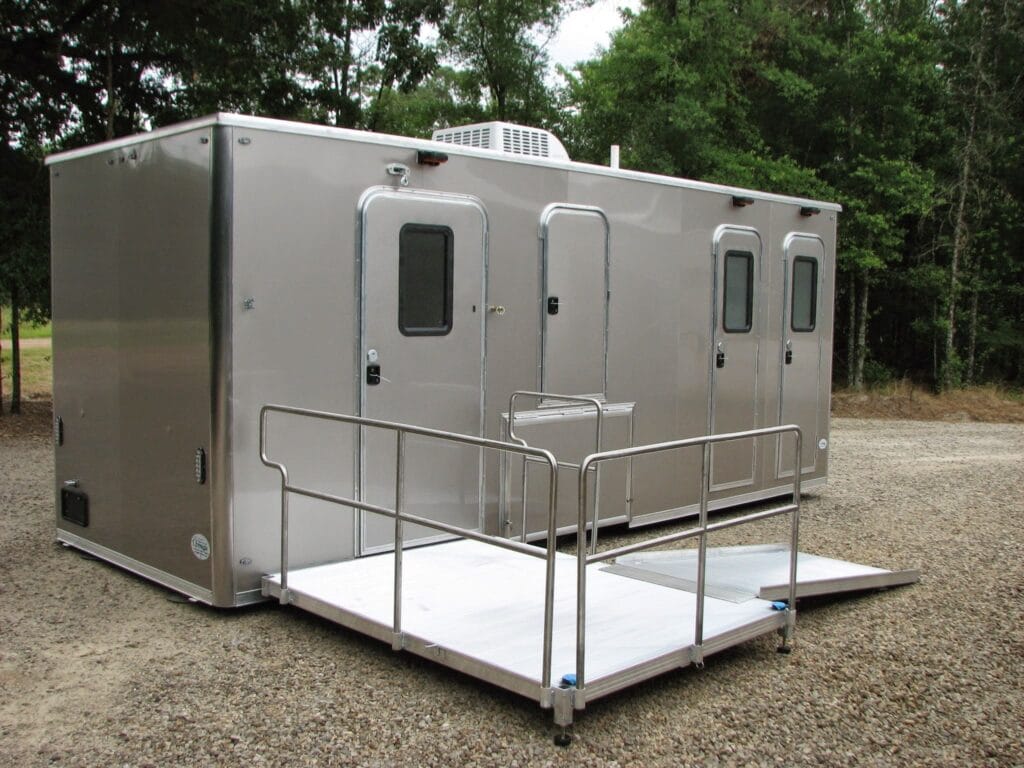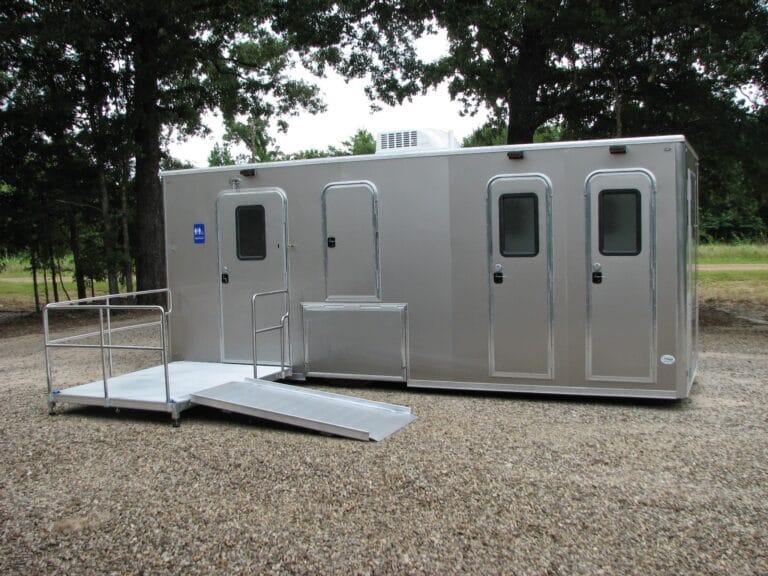
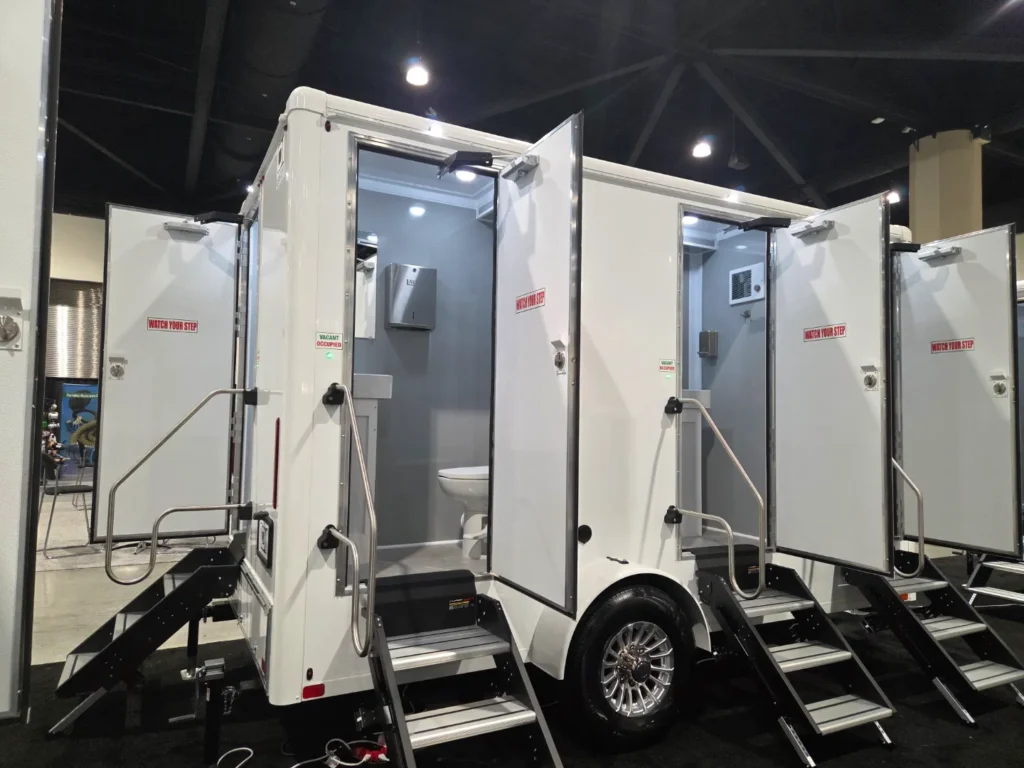
Self-Contained vs. Hookup Restroom Trailers: Which Setup Is Right for You? When buying a restroom trailer, one of the most important decisions is not only how many stalls you need. It is how the trailer will operate once it arrives on-site. Some restroom trailers are designed to connect to existing water, sewer, and power. Others are built with onboard tanks and systems that make them more self-contained.
Both setups can work well. The right choice depends on where the trailer will be used, how long it will stay there, how many people it will serve, and what utilities are available at the site.
Before buying, it helps to understand the difference between a self-contained restroom trailer and a hookup-based restroom trailer.
What Is a Self-Contained Restroom Trailer?
A self-contained restroom trailer is designed to operate with onboard support systems, such as freshwater tanks, waste tanks, pumps, and sometimes generator or solar options depending on the configuration. This gives the trailer more flexibility when it is used at remote sites, outdoor events, disaster response areas, construction zones, parks, or locations without nearby utilities.
Self-contained does not always mean the trailer can run forever without service. Tanks still need to be filled, monitored, and emptied. Power still needs to be planned. But a self-contained design can reduce dependence on permanent utility connections.
This can be especially helpful when the trailer needs to move between locations or serve areas where water and sewer hookups are not available.
What Is a Hookup Restroom Trailer?
A hookup-based restroom trailer connects to site utilities. That may include city water, sewer, and electrical service. This setup can work well for longer-term placements, venues, facilities, campgrounds, municipal properties, or commercial sites where utilities are already available.
The main benefit is convenience during extended use. When connected properly, the trailer may require less tank monitoring and fewer service interruptions. This can be ideal when the trailer will stay in one place and serve steady daily traffic.
The tradeoff is that the site must be ready. If water pressure is poor, sewer access is too far away, or power is not available, the trailer may need additional equipment or a different setup.
Site Location Should Guide the Decision
The first question to ask is simple: where will the trailer be used?
If you are placing the trailer at a remote job site, emergency response area, outdoor venue, agricultural property, or temporary camp, self-contained features may be more important. If the trailer is going to a permanent facility, established event venue, campground, or commercial property, utility hookups may make more sense.
Some buyers need flexibility. A rental operator, for example, may want a trailer that can serve both utility-ready sites and remote locations. In that case, a trailer with flexible tank and hookup options may provide more booking opportunities.
Think About Water Demand
Water use depends on the number of users, the number of sinks, whether the unit includes showers, whether it has flush toilets, and how long the trailer will be used between service visits.
A restroom-only trailer uses water differently than a shower/restroom combo trailer. A shower unit can require more freshwater capacity and more wastewater planning.
Some product pages list specific tank capacities and upgrade options, including freshwater tank upgrades, hot water heaters, and other water-related add-ons. These details matter because tank size affects how long the unit can operate before service is needed.
Waste Capacity Matters Too
Waste tanks are just as important as freshwater tanks. A trailer that serves high traffic without proper waste capacity can quickly create service problems.
Before buying, estimate the number of users, hours of use, event length, service availability, and whether the trailer will be used daily or occasionally. For long events or remote work sites, pump-out access and service scheduling should be part of the plan.
The right tank setup can reduce downtime and make the trailer easier to manage.
Power Requirements Should Not Be an Afterthought
Restroom trailers may need power for lights, pumps, ventilation, climate control, water heaters, hand dryers, outlets, and other features. Some units may require shore power. Others may be configured for generator support or additional options.
Before purchasing, confirm the electrical requirements for the specific trailer. If the site cannot provide the needed power, plan for a generator or other approved power source.
A trailer with A/C, heat, hot water, and multiple rooms will have different power needs than a basic restroom unit.
Choose Based on Real Use, Not Guesswork
A self-contained trailer may offer more flexibility. A hookup-based trailer may be easier for long-term utility-supported placements. Many buyers need a practical mix of both.
Shower Restroom Trailers For Sale offers restroom trailers, shower trailers, ADA trailers, combo units, skids, and mobile sanitation solutions with nationwide delivery. Before choosing a model, compare site access, utility availability, user volume, tank capacity, power needs, and service requirements.
The best restroom trailer is not just the one that looks right. It is the one that can operate reliably where you actually plan to use it.